Essay · April 27, 2026
The flywheel Anthropic hasn't designed for
I'm a product manager at Coinbase and I've never written a single line of code. With Claude Code, I built a prototype that went straight to user testing, then a website from scratch that went live exactly as I'd imagined. Four weeks into becoming a Claude Code power user at Coinbase, I paid for Pro on my personal account.
Anthropic's enterprise traction is strong, but it isn't capturing a downstream conversion: employees who habitually rely on Claude at work and eventually want a personal paid subscription.
Where the flywheel breaks
Across AI-forward tech companies, non-engineers (PMs, designers, ops, legal, finance) see Claude used around them every day. Some pick it up eventually, but almost never by design. When it happens, a peer showed them a specific, high-value workflow.
Anthropic doesn't design for that moment. Even when it happens organically, the downstream conversion isn't being captured. If your employer pays for Claude Enterprise, a personal subscription seems redundant, but it isn't. Enterprise Claude is scoped to work: managed, visible to IT, gone when you leave. Personal Claude knows your side projects, your goals, your questions that have nothing to do with your employer.
At Coinbase, non-technical employees who reached MCP depth converted to personal Pro at around 50%. Most never get there — the activation is undesigned and the conversion path doesn't exist.
Two bets to close the gap
A coworker told me Slack MCP could scan his messages and surface his highest-priority threads in one prompt. One prompt later, it had done in seconds what used to take me an hour. That's what turns a skeptic into a power user — a referral system makes it intentional.
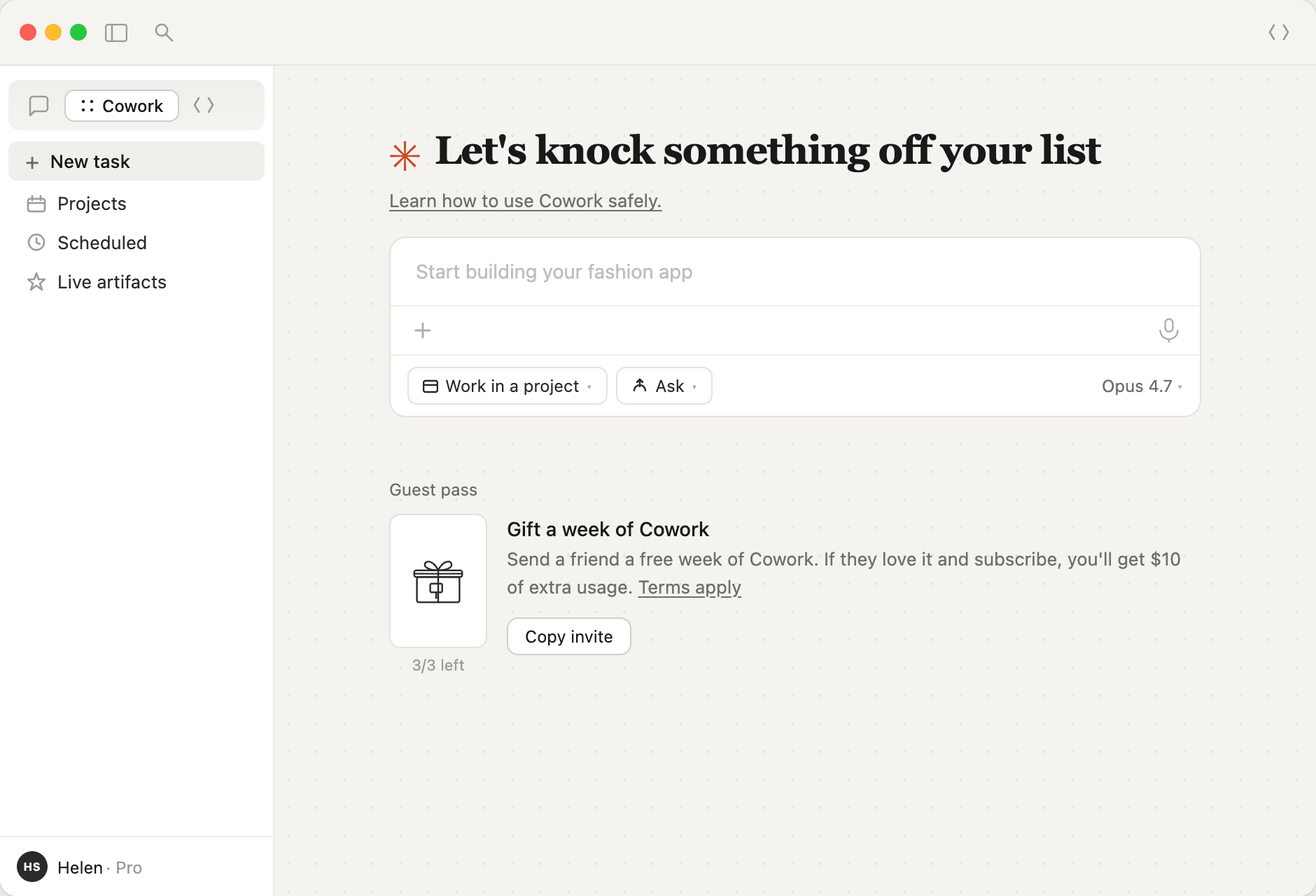
Update, May 2026: Three weeks after I published this, Anthropic shipped Guest pass for Cowork — a free-trial referral letting users gift a week of Cowork to someone new. I referred a friend and had no way to know if she signed up, whether the credit landed, or what happened to my unused invites.
The simplest fix: a notification and email when each invite converts. A referral with no signal gets sent once. One that signals value for referrer and referee compounds.
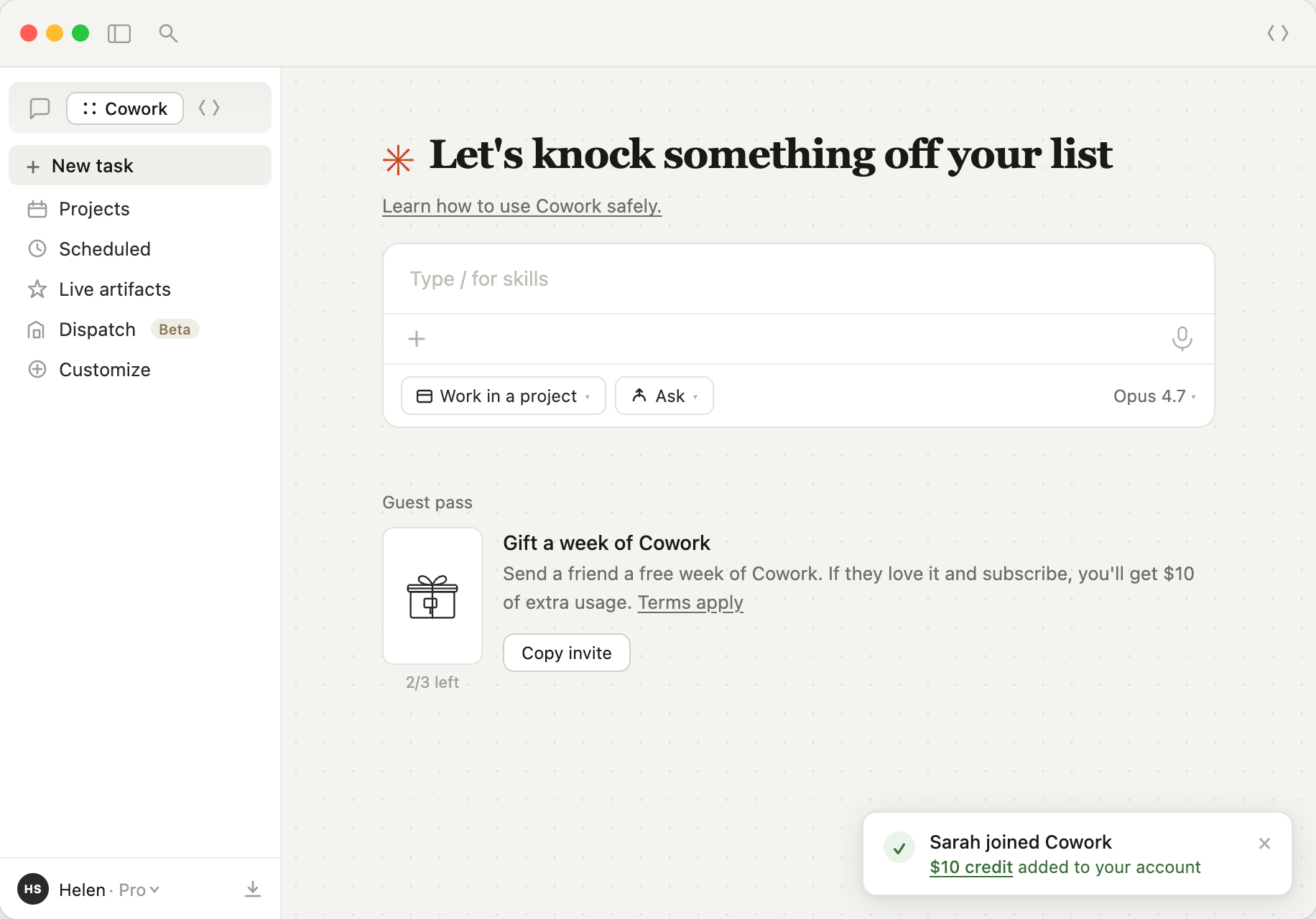
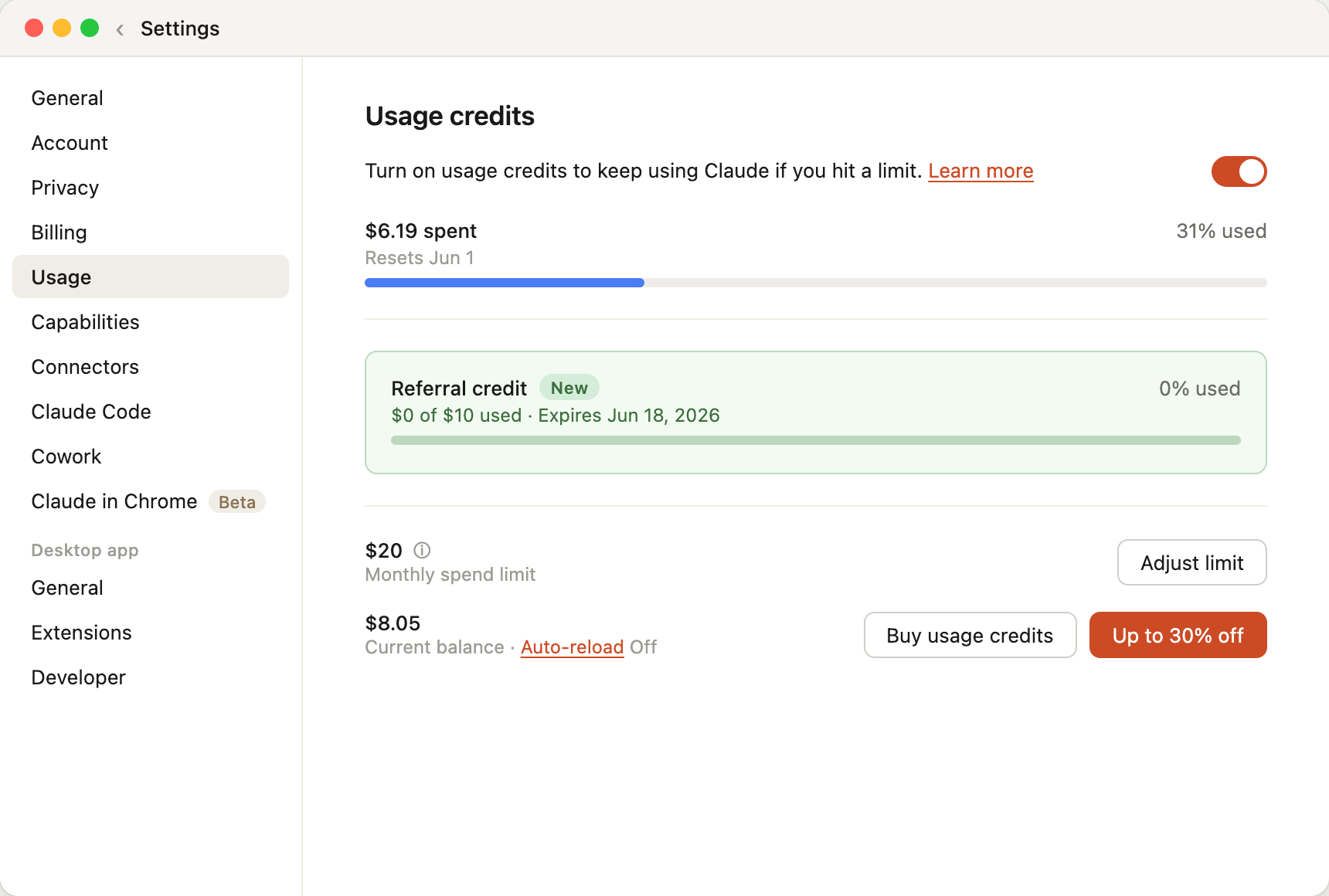
The full vision is a persistent referral home: invite status, conversion history, and credit confirmation across all your invites.
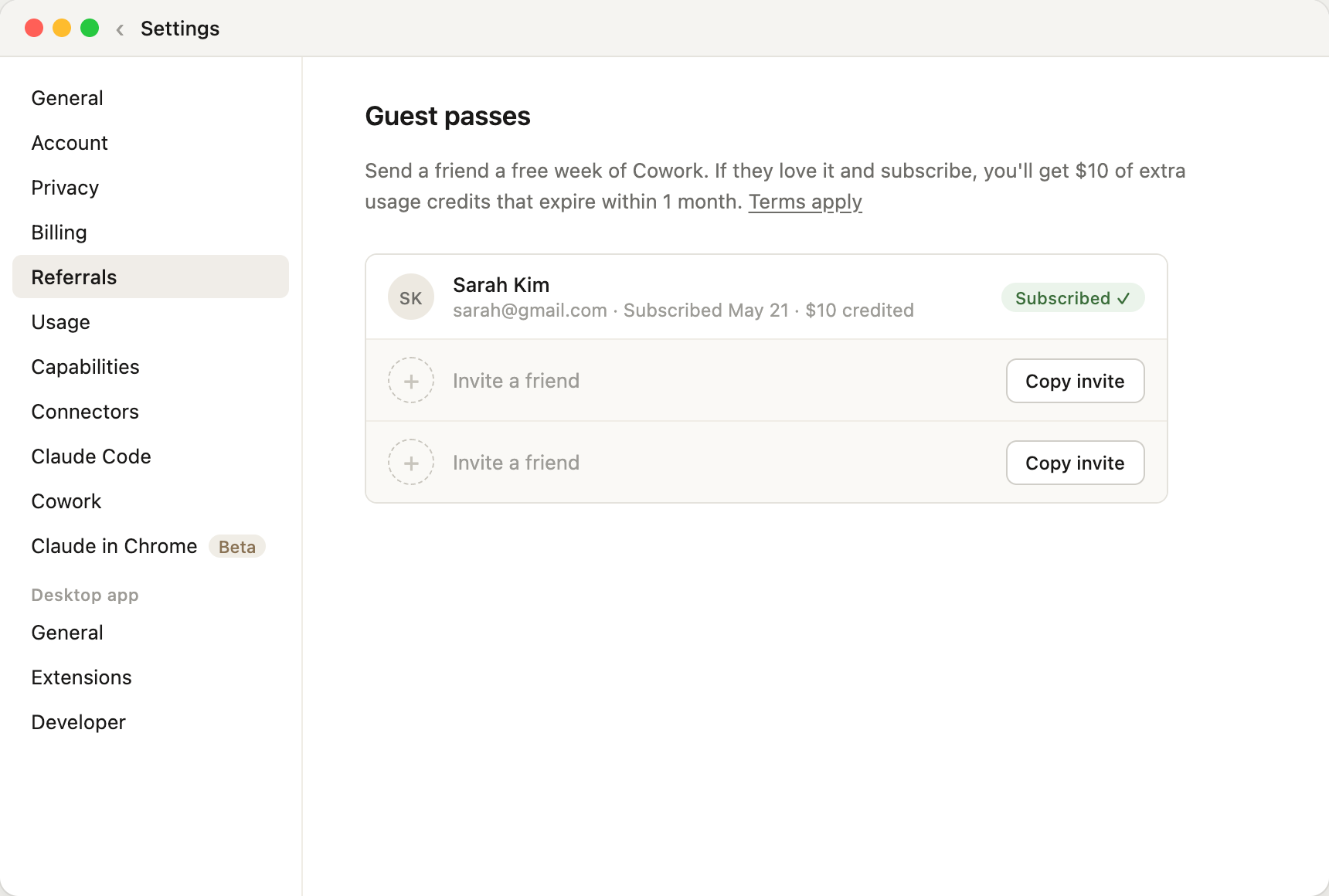
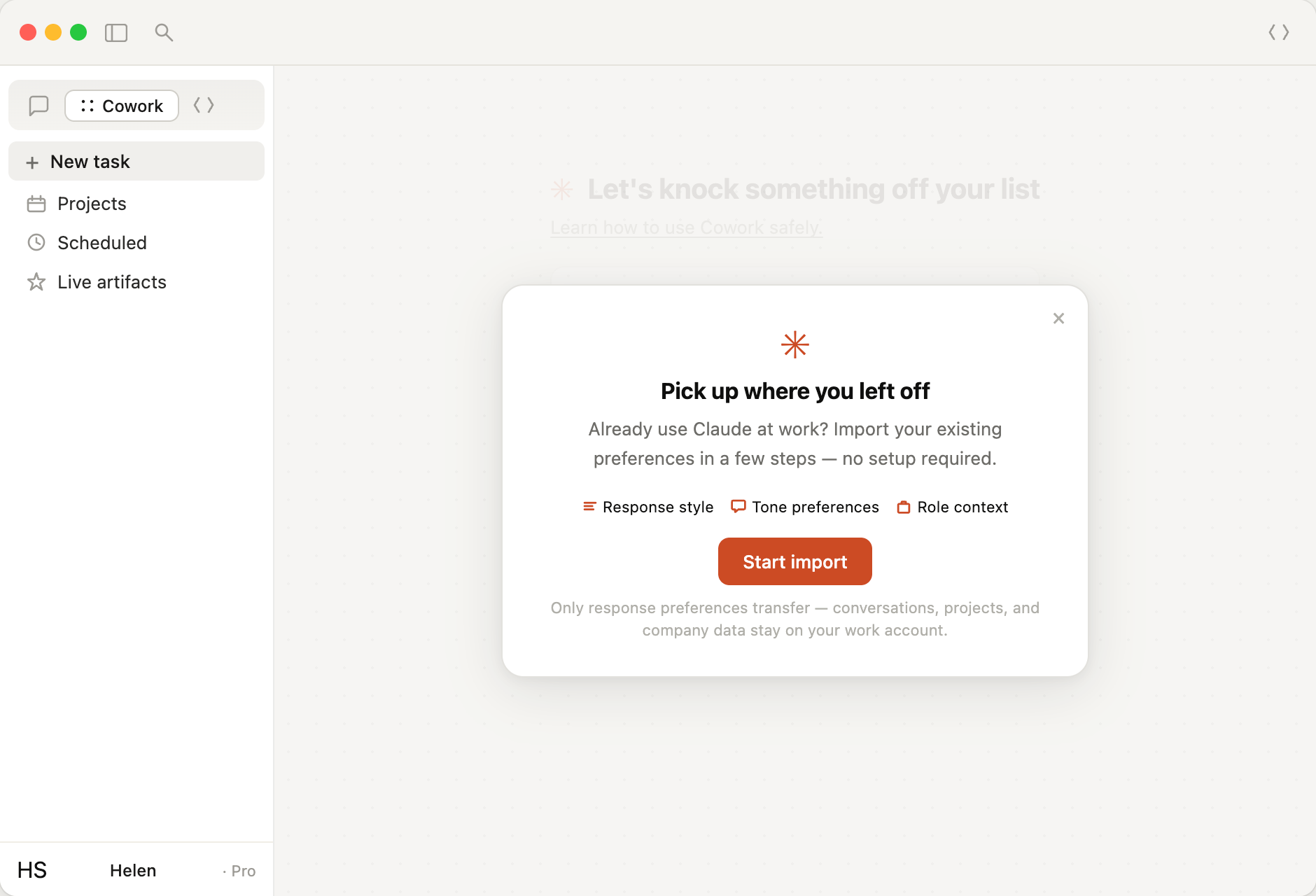
For power users, the barrier is losing everything Claude knows about them: their communication style, how they work, what they care about. A new user who spends their first session re-explaining themselves is deciding whether to stay.
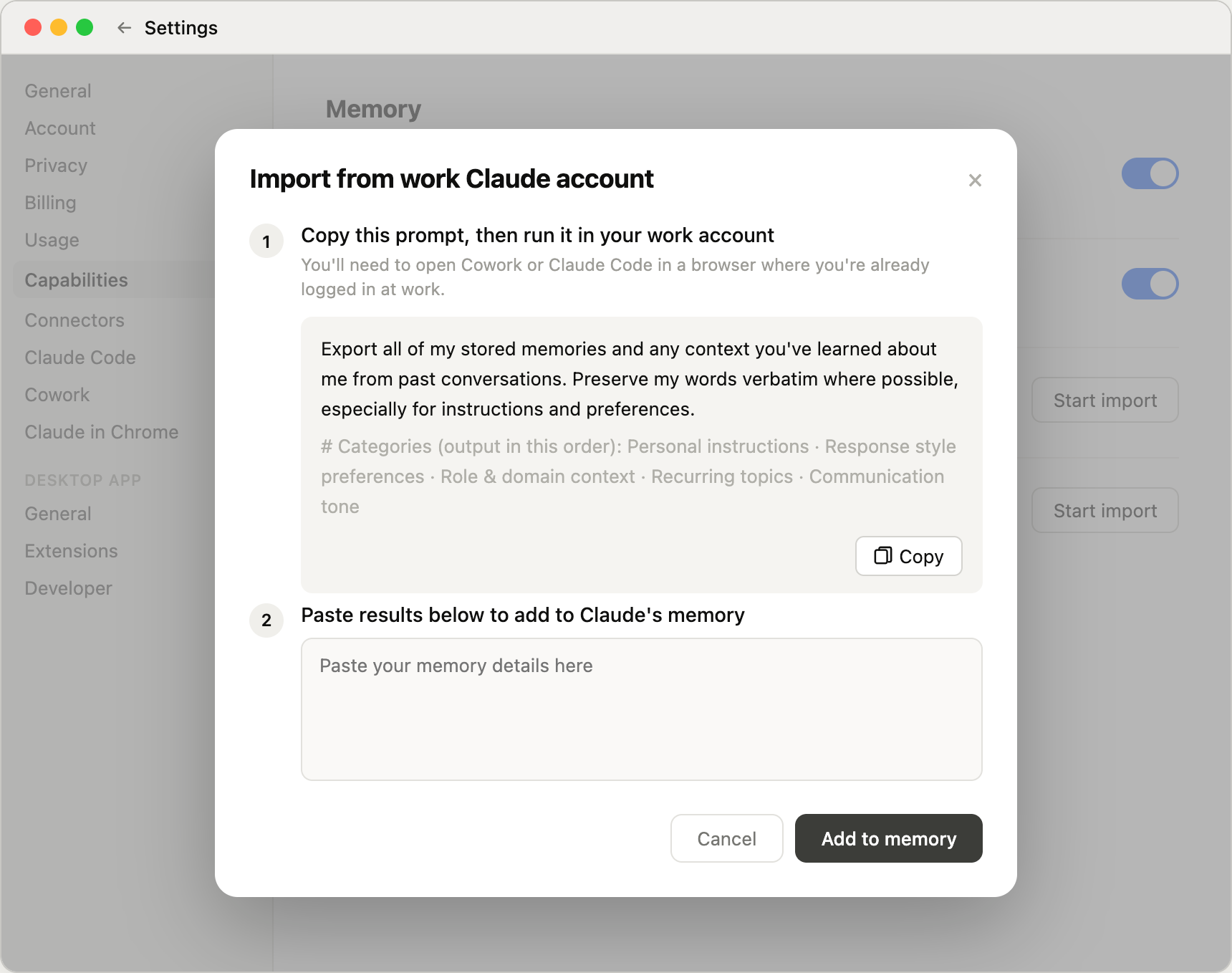
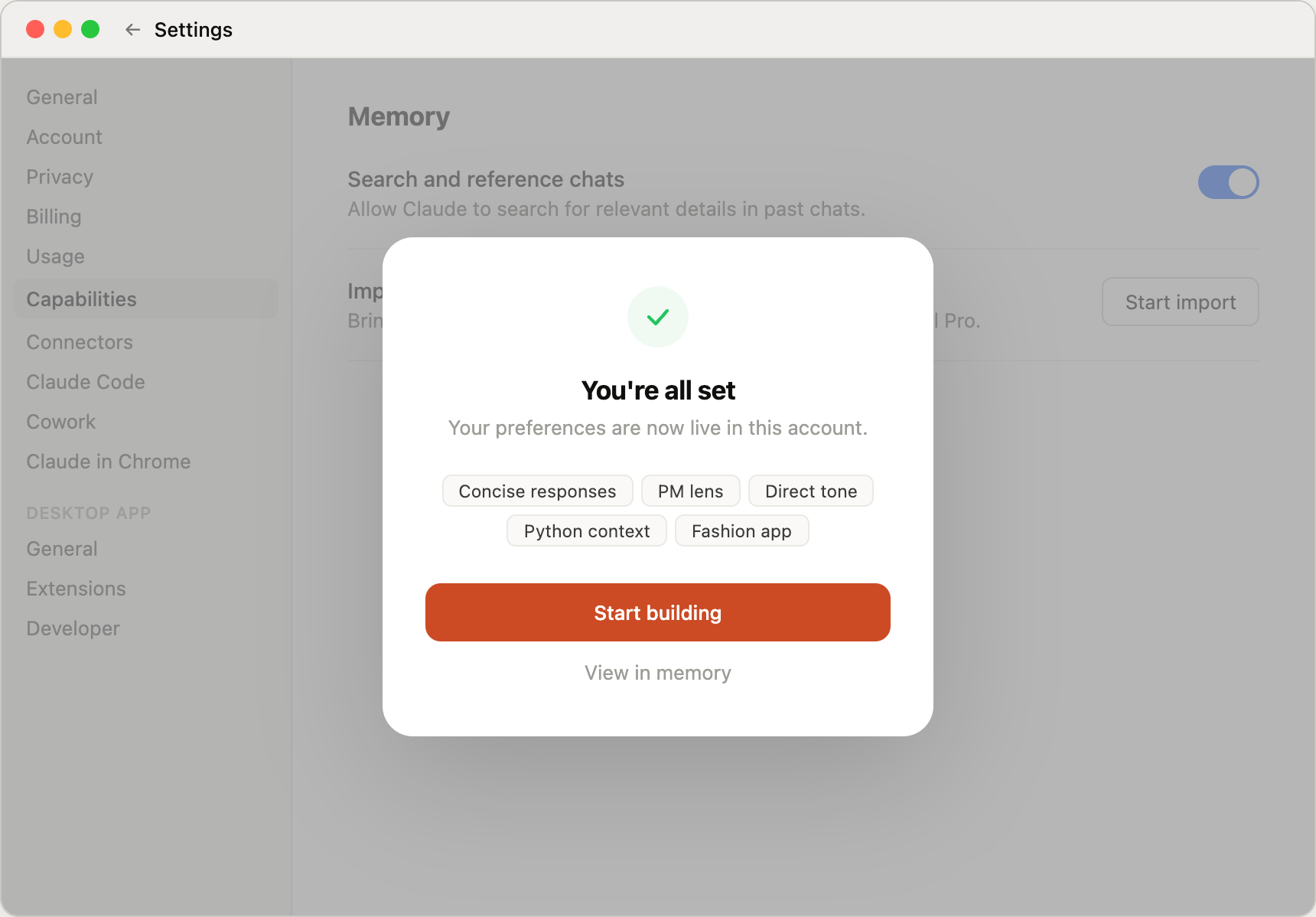
The fix is a one-time import you trigger from your personal Pro account. Claude gives you a prompt to run in your Cowork or Claude Code session — paste the results back, and your preferences transfer: response style, domain context, tone, role context. The switch feels like an upgrade, not a reset.
Quantifying the two bets
Both bets are moving the same number: the enterprise-to-personal conversion rate. To move it, you need two things: more enterprise users making the switch, and those users sticking once they do.
The north star for the referral system: how many personal Pro conversions it drives. The right benchmark is referred converts vs. organic paid subscriptions at 90 days. If referred users churn when credits expire at 30 days, the channel is net negative even when volume looks good.
For the memory import, the north star is 7-day retention — the window where cold-start friction either kills the habit or doesn't. The guardrail is simpler: did the user come back within 48 hours? If they returned, the import did its job.
For this segment, price isn't the barrier. Enterprise power users have already proven willingness to pay. The question isn't whether they'd spend $20 a month, it's whether they understand what they're buying. A personal paid account is a different surface. The same capabilities applied to their actual life: personal finances, side projects, creative work. The referral and the import both work because they make that distinction legible.
The unlock for everyone else
The referral ships first — it generates conversion volume while the product is growing. The import follows once there are converts to retain. Together they build something Anthropic doesn't currently have: a consumer conversion motion that compounds as the enterprise base grows. Without it, the gap compounds instead.